


Most single side open roll bag machine faults fall into four groups: the bag is not picked, the bag does not open, the seal is weak or burnt, and the code will not scan. Each group has a short list of causes. Each cause has a check you can run in minutes. Work through them before you order parts.
Start with the consumable, not the machine. Film width, thickness, perforation and opening depth decide whether the pick and open step works at all. A single side open roll bag machine can only be as stable as the roll you feed it.
Decide these five things before you compare models
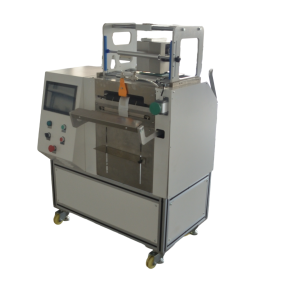
Buyers often compare cycle rate first. That is the wrong order for small-batch work. Peak speed rarely limits the line; changeover and loading rhythm do. Fix these five decisions first, then look at the [pre-opened roll bag packaging machine](https://www.autobagmachine.com/product-category/pre-opened-roll-fed-bag-packaging-machine/) range.
| Decision | What to fix | How to judge it |
|---|---|---|
| Bag format | Single-side open roll film, width and length | Measure the part at its widest point, add 6–10 mm clearance, and confirm opening depth against the pick stroke |
| Film thickness | PE or laminated structure | Trial seal your own film: thin film must not burn through, thick film must not under-seal |
| Loading method | Manual, vibratory feeder or robot | Manual loading on a tabletop P350S typically gives 8–15 bags/min; actual output depends on part shape, loading rhythm and whether an operator or a feeder loads the bag |
| Print content | TTO head size and ribbon | Pick the print area by the largest code you must fit: 53×55 mm, 55×115 mm or 107×115 mm |
| Changeover load | Recipe library depth | Ask how many recipes are stored, then time one recall from the touchscreen to the first good bag |
On batches under a few thousand pieces, changeover downtime usually costs more than lost cycle rate. Weigh bag cost and consumable fit together, not separately.
Fault tree 1: the bag is not picked or does not open
Symptom: the machine feeds film but the gripper or suction cups come up empty, or the bag opens on one side only. Work down this order.
- Film spec drift. A new roll lot with a different opening depth or perforation position is the most common cause. Check the roll label against the original spec sheet and compare opening depth with a caliper.
- Low air pressure or a worn cup. A glazed suction cup will open a light bag and fail on a heavy one. Read the gauge at the cup, not at the main line.
- Roll unwind tension. Too much drag makes the pick miss the top edge. Release the unwind brake and re-test with three consecutive picks.
- Pick height offset. If the bag is picked but sits low, the open step has nothing to grab. Adjust pick height one step at a time and watch three bags.
Verification: run 20 consecutive bags on production film. Fewer than 19 clean opens means the film spec or the cup geometry needs review before production starts.
Fault tree 2: seals are weak, wrinkled or burnt
Servo torque sealing with 360-degree wrap heating and air cooling is built to hold a consistent seal across film gauges. When it does not, separate the film from the machine.
- Burnt seal on thin film. Temperature is too high for the gauge, or cooling air is blocked. Drop the setpoint in small steps and confirm the seal still peels cleanly.
- Under-sealed thick film. Dwell or pressure is short. Increase dwell first, then pressure.
- Wrinkles on one edge only. Film is tracking off-center. Check roll alignment and the perforation line against the seal jaw.
- Seal strength varies bag to bag. The multi-axis servo bus may be losing sync between bag feed, sealing and print timing. Ask for a timing trace, not a verbal assurance.
Acceptance test: cut a strip from five bags at the start, middle and end of a roll. Pull each by hand at a steady rate. Any seal that opens before the film tears is a fail, whatever the setpoint on screen says.
Fault tree 3: codes are patchy, smeared or will not scan
Inline printing removes the separate label step, so a bad code stops the bag, not just the label. On any single side open roll bag machine with a TTO head, keep ribbon and printhead data next to the bag spec.
- Patchy code. Ribbon width does not match the printhead width, or the ribbon grade does not suit the film surface. A mismatched [thermal transfer ribbon](https://www.autobagmachine.com/product-category/thermal-transfer-ribbon/) is the most common cause of patchy or non-scannable codes.
- Code runs off the seal area. Print and seal positions are out of phase. Reprint at slow speed and check the code stays inside the flat seal zone.
- Code smears after sealing. Print is landing on a hot jaw, or the film has not cooled before contact. Check air cooling and print timing together.
- Small head, long content. A 53×55 mm area will not hold a long lot code plus a QR block. The 107×115 mm head covers larger label content in one pass; size the code on paper before ordering.
Verification: print 30 codes, scan every one with the reader your customer uses, and keep the worst sample. Grade the sample, not the average.
Acceptance run and quote scope
Run acceptance with your own film, your own parts and your own scan reader. Record four numbers: clean opens per 20 bags, seal peel result per strip, scan pass rate per 30 codes, and minutes from product recall to first good bag. Those four numbers predict line performance better than any brochure figure.
On quote scope, ask what is included and what is an option. Print heads and print areas are often optional configurations, not fitted as standard. Film and ribbon are consumables quoted per roll. Interface work for robot arms, weigh feeders, vibratory feeders or MES/ERP connection is usually priced separately. Casters and the dual-zone safety design are part of the machine, but confirm the interface list in writing.
For the tabletop option, check the [JYZN-P350S pre-opened roll bag packaging machine](https://www.autobagmachine.com/product/jyzn-p350s-pre-opened-roll-fed-bag-packaging-machine/) and confirm the 8–15 bags/min range against your own loading rhythm, not the datasheet.
What this fault tree cannot tell you
Film behavior on your line depends on the pick mechanism and sealing parameters together. A fault tree narrows the cause; it does not replace a trial seal on your own film. If a symptom persists after these checks, record a short video of the pick, seal and print cycle and send it with the film spec. The next step is a model recommendation and a reference price band for a single side open roll bag machine sized to your part and batch pattern.
Get a quote and a model recommendation
Send these four things and we can come back with a model and a reference price band in one go, instead of a week of back-and-forth:
- Bag size (width x length) or a photo of the pack you use today
- Part size, part weight, and how many pieces go into one bag
- Target output in bags per minute, and running hours per day
- Whether each bag needs a date code, batch number or QR code printed on it
We reply within 2 working hours and send a model recommendation with a reference price band within one business day. If you want to see the seal and print first, send a sample part and we will run a trial bag.