


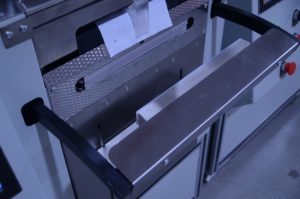
Constant Heat vs. Impulse Sealing: Core Differences
| Comparison Dimension | Constant Heat Sealing | Impulse Sealing |
|---|---|---|
| Working Principle | Sealing bars remain continuously heated; material surfaces melt instantly upon closure. | Sealing bars are energized instantaneously after closure and cool rapidly after sealing is completed. |
| Heat-up Process | Requires preheating; consumes energy even in standby mode. | No preheating required; instant heat, instant operation. |
| Cooling/Pressure Process | None. Bars remain hot; film temperature is still very high when bars open. | Yes. Seal is cooled and set under pressure before bars open. |
| Principaux avantages | Short seal cycle, high speed; ideal for continuous, high-volume production. | Seals are strong, flat, and aesthetically pleasing; no risk of shrinkage or deformation. |
| Key Disadvantages | Risk of seal shrinkage, deformation, and wrinkling, affecting both appearance and strength. | Seal cycle is relatively longer (includes cooling time), which can be challenging for ultra-high-speed lines. |
| Best Suited For | Applications where seal appearance is not critical and maximum speed is the priority. | Applications demanding high seal strength and appearance (flatness, consistency) , especially for lightweight and precision products. |
The Value of the Cooling/Pressure Process: A Key Differentiator
The “cooling under pressure” process is the core advantage of impulse sealing. It is more than just cooling—it is a controlled setting phase where the molten seal area solidifies under pressure, delivering three critical benefits:
-
Stronger Seals: The material crystallizes and sets under pressure, creating tighter molecular bonding and higher peel strength.
-
Better Appearance: No shrinkage, no wrinkles, with consistent and flat seal width, enhancing the overall packaging quality.
-
Broader Material Compatibility: Effectively controls thermal deformation for heat-sensitive and easily distorted films, such as multi-layer laminates and thin PE films.
Special Considerations for Pre-Opened Roll Bags
“Pre-opened roll bags demand impulse sealing.”
-
The Challenge: Since the bag mouth is already formed, excessive or uneven heat during sealing can easily cause the bag mouth to shrink and curl, defeating the purpose of the “pre-opened” feature.
-
The Solution: Impulse sealing, combined with a 360° forced-air cooling system, rapidly and evenly dissipates heat after sealing. This effectively eliminates “heat buildup,” ensuring a flat, aesthetically pleasing seal and maintaining the bag’s shape integrity.
Why Constant Heat Sealing is Not Recommended for Pre-Opened Baggers
In pre-opened roll bag packaging operations—especially those involving manual product loading—constant heat sealing presents a critical yet often overlooked issue:
-
Continuous Heat Accumulation: The sealing bars remain at a persistently high temperature (typically above 150°C), constantly radiating heat both in standby and during operation.
-
Temperature Rise at the Workstation: Operators must work in close proximity to the heat source, repeatedly loading products and activating the seal cycle, exposing them to significant heat stress.
-
Impact on Both Personnel and Seal Quality:
-
For Operators: Constant thermal radiation causes discomfort to hands and face, creates a harsh working environment, accelerates fatigue, and poses a potential burn hazard.
-
For Seal Quality: Without a cooling/pressure process, the seal area is prone to shrinkage and deformation, which compromises the flatness and appearance of the pre-opened bags.
-
Summary Recommendation (For Your Materials)
For pre-opened roll bagging machines with manual loading, impulse sealing is the mandatory choice. It eliminates heat accumulation at the workstation, ensuring operator safety and comfort, while delivering the flat, strong, and aesthetically consistent seals that pre-opened bags require.
 English
  French
  German
  Portuguese
  Italian
  Japanese
  Indonesian
  Vietnamese
  Malay
Malay  Chinese